



Buretsu
Japanese silk self-tie bow tie · floral
185,00 €
/ piece
Japanese chirimen silk from a vintage 1960s kimono.
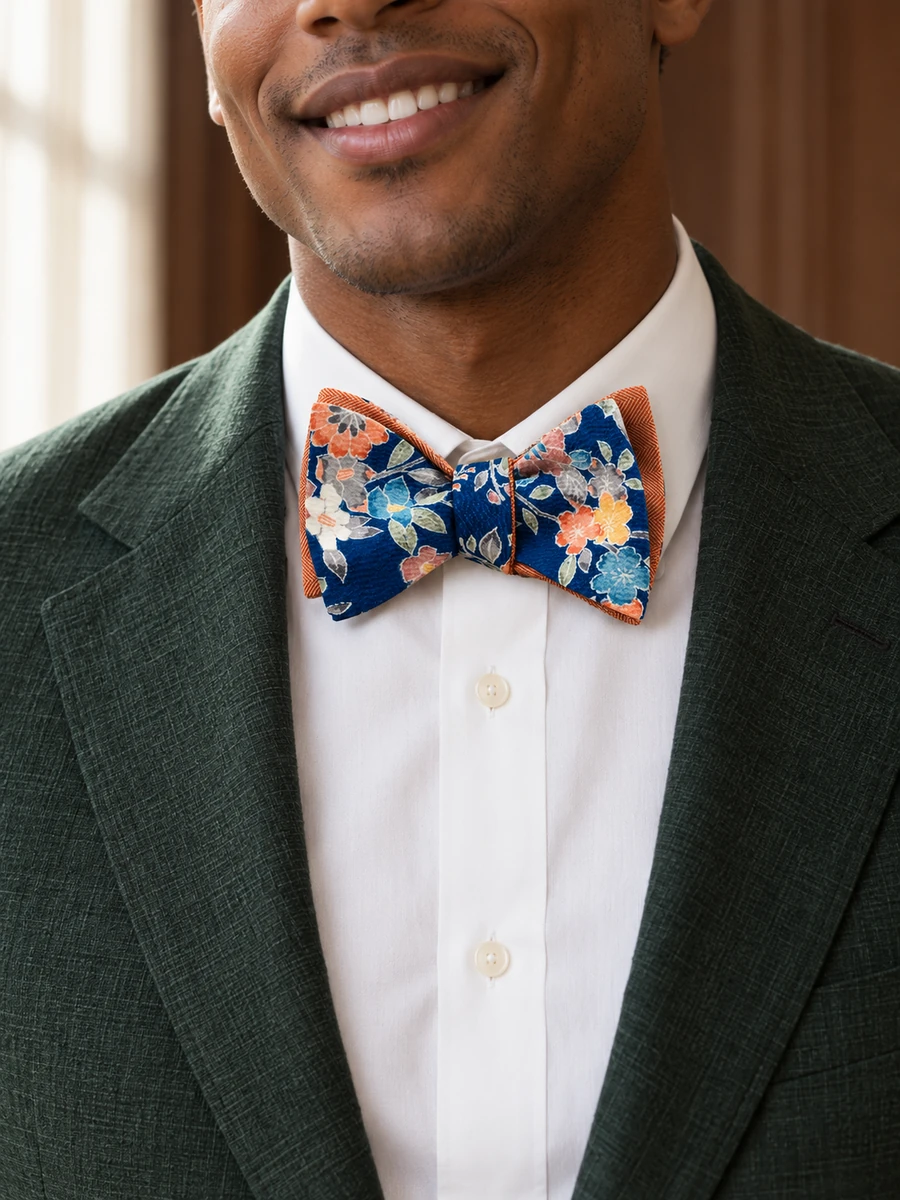
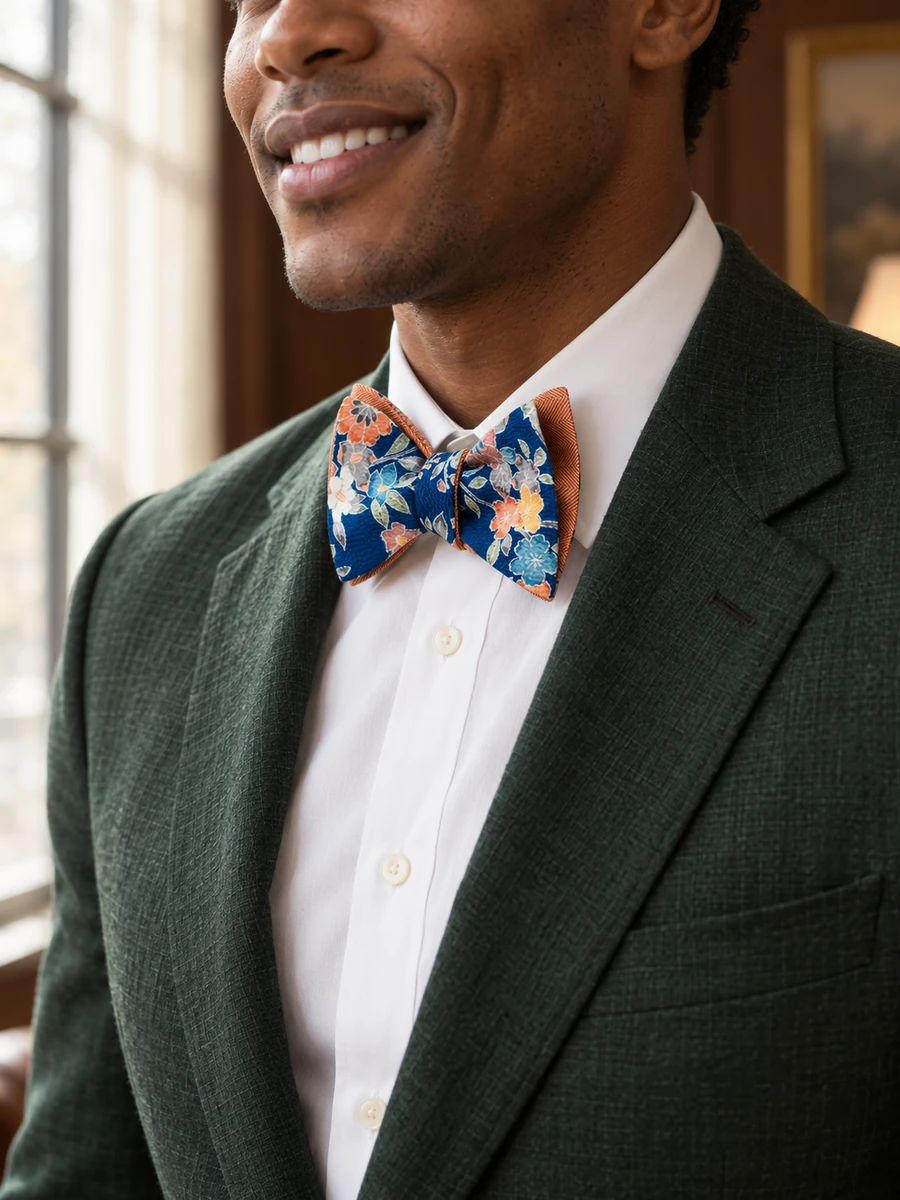
Blue, pale blue, green, orange and coral animate the floral pattern; coral returns on the cashmere reverse.
On the reverse, 100% cashmere Lanificio di Pray in Biella.
Self-tie or hybrid self-tie? +
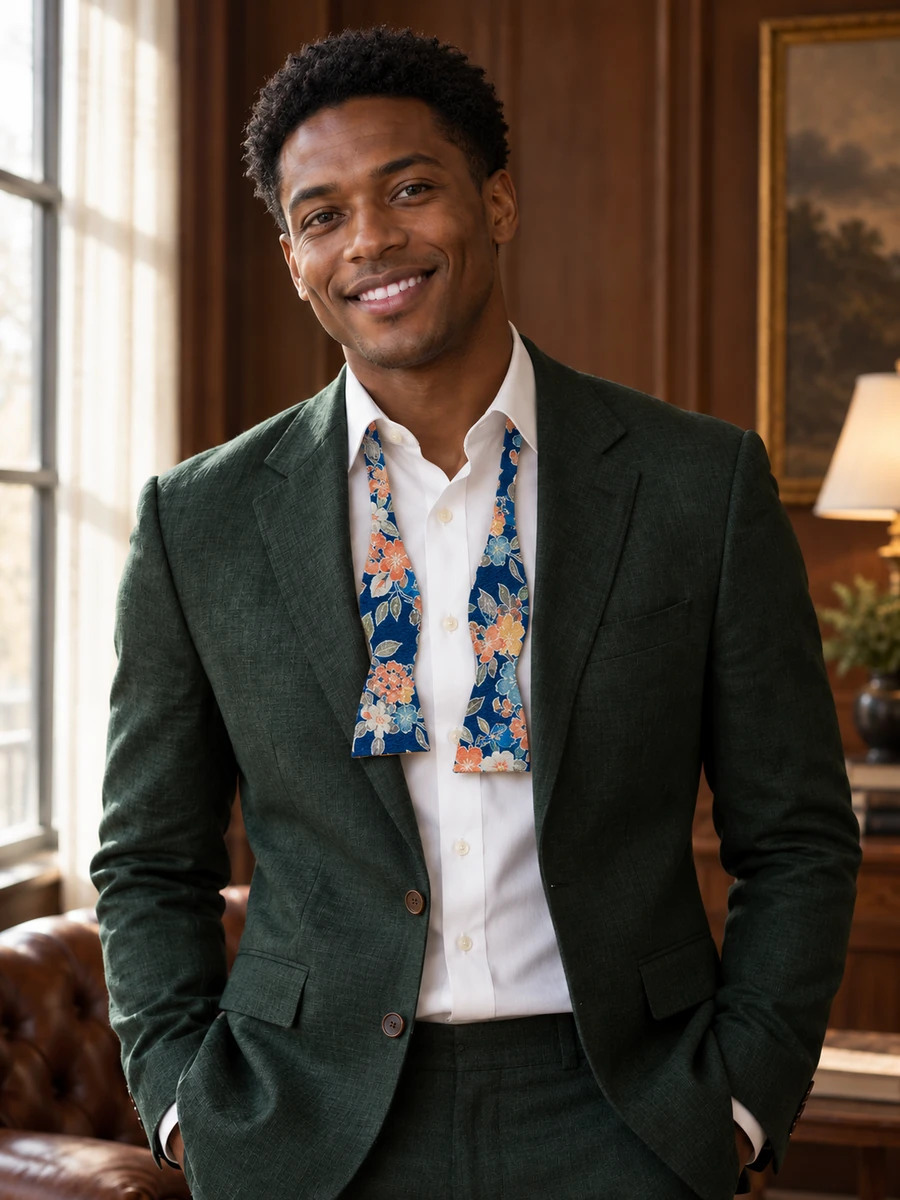
Self-tie — the traditional bow tie, untied and tied each time you wear it.
Hybrid self-tie — opening hooks let you put it on while keeping the knot tied, preserving the shape of a true self-tie bow tie.
Shipping
Customer care
Made in Italy
Blue,
with an echo of coral.
Blue, pale blue, green, orange and coral animate the floral pattern; coral returns on the cashmere reverse.
The pattern changes scale as the silk takes the shape of a bow.
Memory, worn.
First, a Japanese kimono from the 1960s.
Buretsu brings this fragment of fabric close to the face.
The cut selects the pattern.
The knot changes its presence.
A name.Another era.
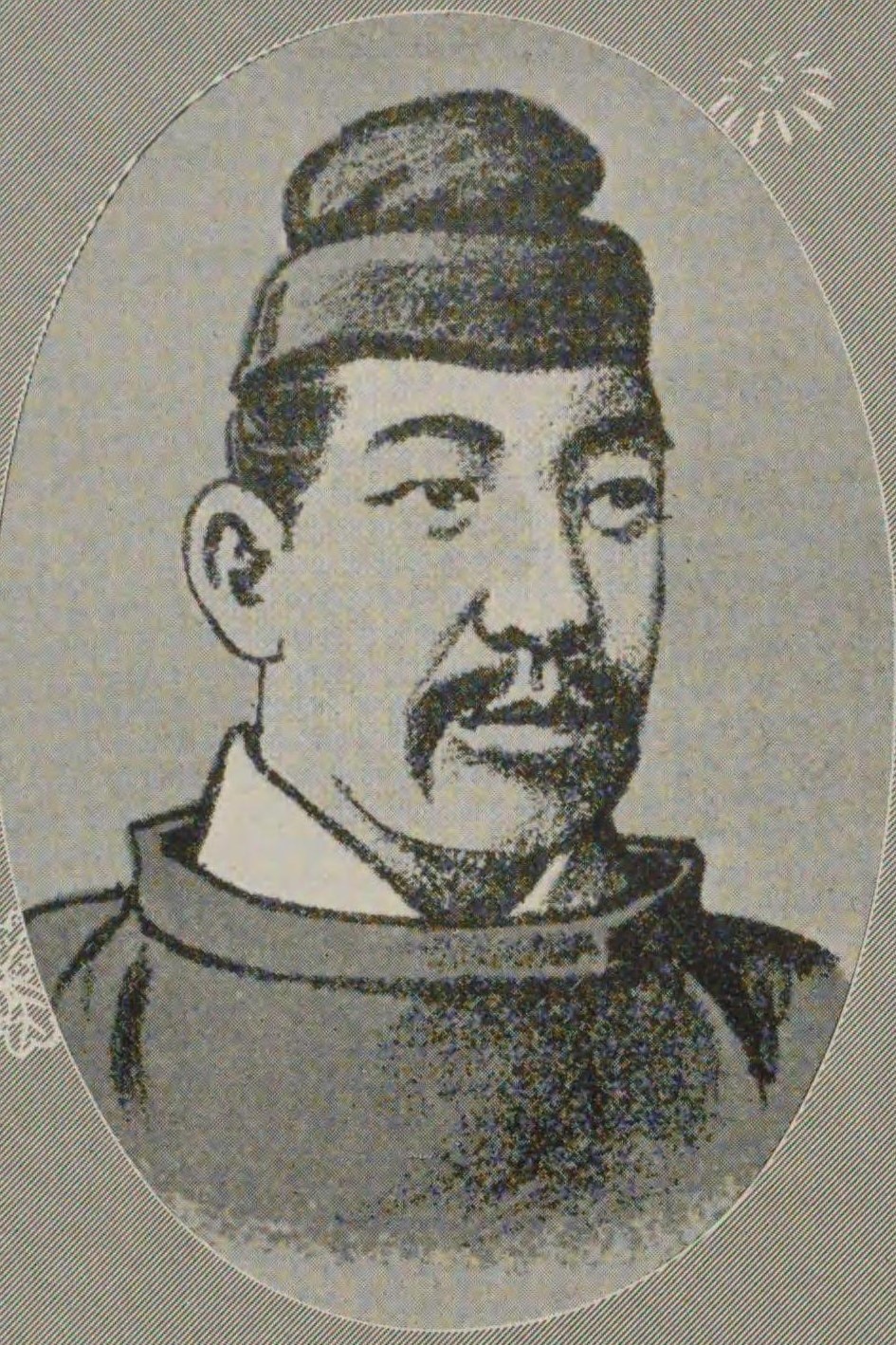
Depiction of Buretsu.
明治天皇聖徳奉讃会 · Wikimedia Commons · Public domain
Buretsu Tennō
Buretsu is the twenty-fifth ruler in Japan’s traditional succession.
In the chronicles, he is Ninken’s son and precedes Keitai’s accession.
The account of his life should be read as testimony from ancient sources, rather than a fully verifiable biography.
The context
Traditional chronology
The bow tie’s name opens a connection with Japanese history.
Alongside the memory held in its fabric, the dedication preserves another fragment of the culture behind Shibusa.
Historical sources: Biography of Buretsu · Imperial Household genealogy
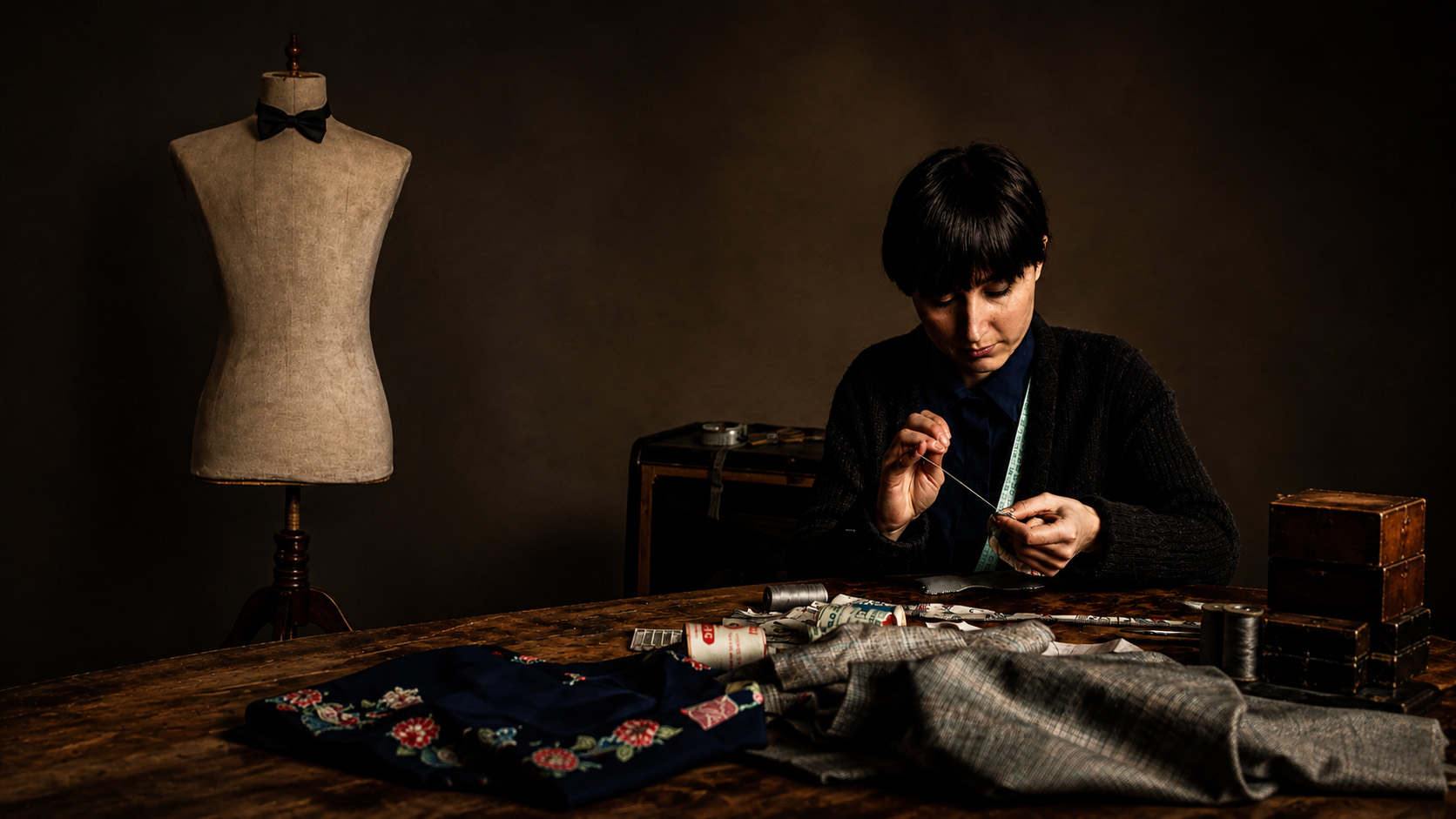
Before the knot, a closer look.
Observe the silk.
Find a balance in the pattern.
Choose where the form begins.
This is the work behind Shibusa, from fabric panel to bow tie.
Angela in the atelier · The world of Shibusa
A closer look. Another world.
Japanese chirimen silk from a vintage 1960s kimono.
Blue, pale blue, green, orange and coral animate the floral pattern; coral returns on the cashmere reverse.
The original photographs offer a closer look at the pattern and the actual fabric.
The front.Another surface.
On the front, Japanese chirimen silk from a vintage 1960s kimono.
On the reverse, 100% cashmere Lanificio di Pray in Biella.
Nickel-free metal hooks. Adjustable to a maximum neck size of 53 cm.
Self-tieUntie and tie the bow each time you wear it.
Its shape comes from your own hands.
Hybrid self-tieOpening hooks allow you to put on the bow tie while keeping the knot tied.
The purchase selector shows the versions currently available.
The Japanese silk
Bow dimensions, cm
Maximum neck size
Colour, close to the face.
A plain blue jacket and white shirt let the bow tie’s colours take the lead.
The bow tie is where Banderari’s exploration began in 2014.
Buretsu brings its own textile pattern to this form.
The memory of the material meets a contemporary way of wearing it.
BURETSU
SHIBUSA
JAPANESE CHIRIMEN SILK FROM A VINTAGE 1960S KIMONO
REVERSE: 100% CASHMERE LANIFICIO DI PRAY IN BIELLA
Read the object.
Material, provenance, construction and proportions.
The details to help you choose Buretsu and read its photographs.
ObjectSelf-tie bow tie.
CollectionShibusa.
FrontJapanese chirimen silk from a vintage 1960s kimono.
Reverse100% cashmere Lanificio di Pray in Biella.
Frontfloral · blue, pale blue, green, orange, coral.
Reverseherringbone · coral.
ConstructionSelf-tie and hybrid self-tie versions.
Nickel-free metal hooks. Adjustable to a maximum neck size of 53 cm.
DimensionsHeight: 7 cm. Overall length: 92 cm. Bow: 12 cm wide × 7 cm high.
Presentation and careContact Banderari for information on packaging and care.
CraftsmanshipHandmade in Umbria, Italy.


