

-->
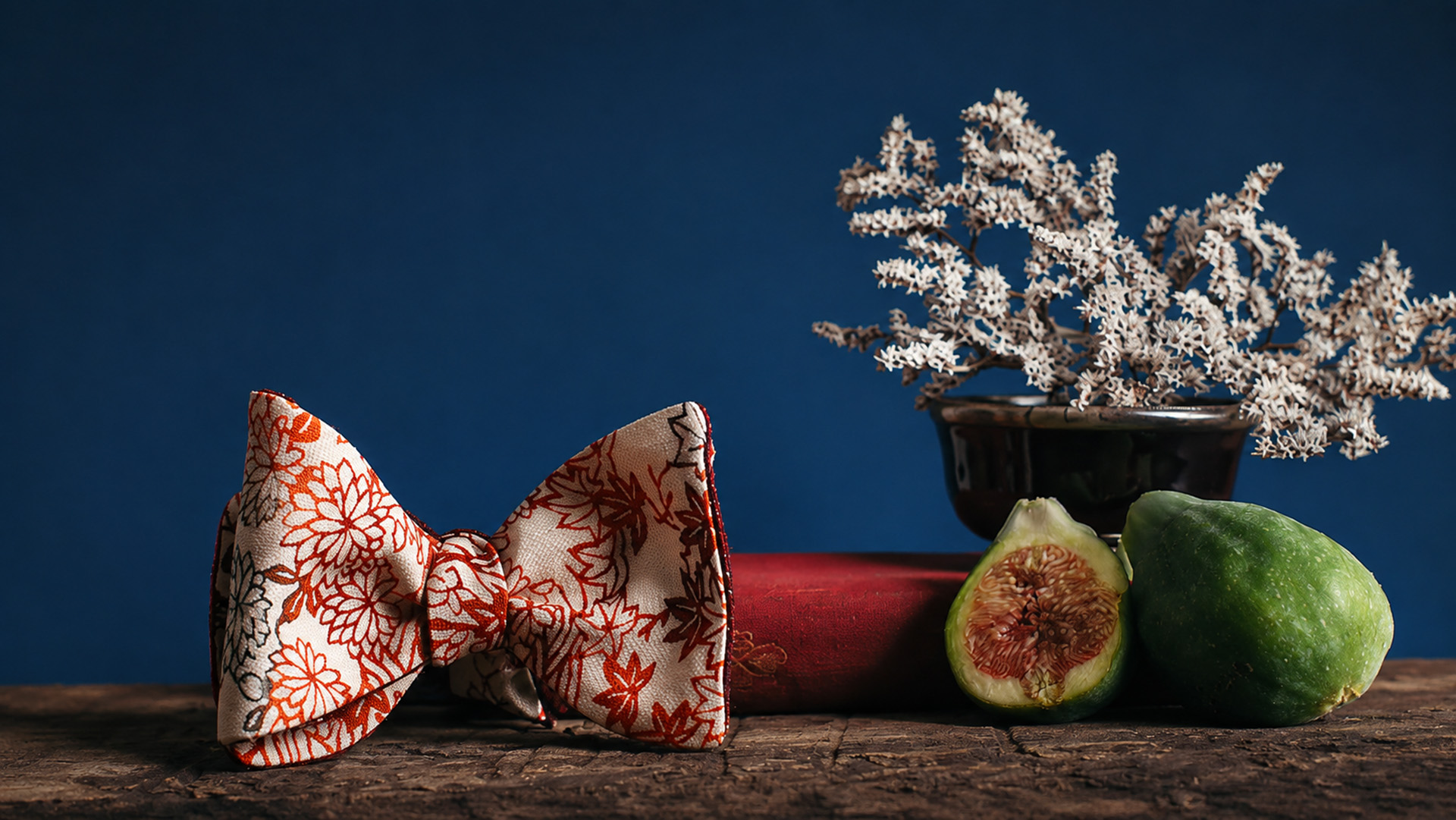
Shibusa bow tie in floral Japanese silk on a blue ground, with flowers and figs

BANDERARI · JAPANESE SILKS

Shibusa

Japan, in a knot.

Vintage kimono silks. Italian hands.
A new story to wear.

Banderari Shibusa Sanjo bow tie with embroidered green waves, worn with a blue suit

JAPAN → UMBRIA · SHIBUSA

Silk holds a memory.
A bow tie, a future.

Before the knot, a kimono. Before the shape, a pattern.

Vintage Japanese silks are the heart of Shibusa: fragments chosen for their colour, texture and strength of pattern. In Banderari’s hands they find a new presence, retaining what makes them distinctive.

Detail of the Banderari Shibusa Toba bow tie in Japanese floral silk, with red, green and yellow flowers

01 · THE SILK · A CLOSER LOOK

Light meets
the surface.

The Chirimen has a fine crêpe texture: the pattern gains depth and colour moves through the folds. The Rinzu reveals its pattern in the weave, between areas that absorb and reflect the light.

Shibusa brings together kimono and obi silks, decorative panels, embroidery and contrasting surfaces. Each material asks to be seen differently, even before it is cut.

Pictured: Toba · chirimen silk.

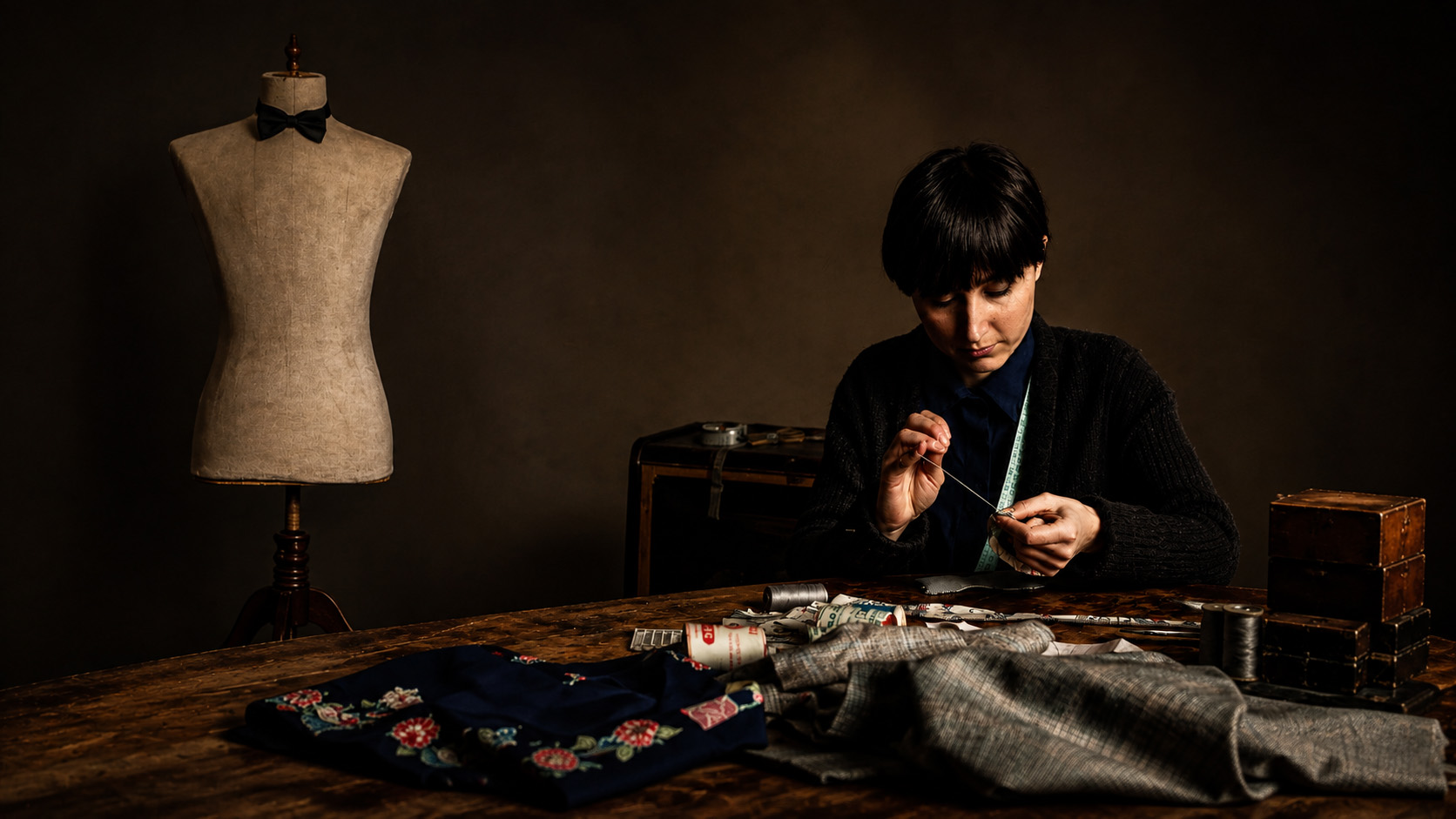
Angela making a Shibusa bow tie

02 · THE HANDS · CUTTING IS ALREADY A CHOICE

Beauty begins
before the knot.

Angela studies the panel, seeks balance within the pattern and chooses a fragment. A flower may become the centre of the bow. A line may cross it. A colour may appear only within a fold.

Made by hand in Italy, the bow tie carries this choice into its shape. The knot does not erase the silk: it gives it a new voice.

Banderari Shibusa campaign: a light blue floral bow tie draped over the shoulders, reflected in a mirror

SHIBUSA · ANOTHER PERSPECTIVE

One detail.
An entire presence.

03 · THE ENCOUNTER · 01 / 03

Toba

Without hesitation.

Green, orange, mustard yellow and pink. In Toba, the floral pattern of a 1960s kimono gathers within the folds of the bow. Chirimen silk retains its vibrant presence even against an understated suit.

CHIRIMEN SILK · FLORAL PATTERN

Discover Toba


Toba, a Banderari Shibusa Japanese silk bow tie, worn

03 · THE ENCOUNTER · 02 / 03

Sanjo

A wave, held
in a knot.

An embroidered wave meets chirimen silk. Sanjo pairs white, green and black with a silver shantung silk reverse. Texture becomes relief, giving the detail depth.

CHIRIMEN SILK · EMBROIDERED WAVE

Discover Sanjo
Sanjo, a Banderari Shibusa Japanese silk bow tie, worn

03 · THE ENCOUNTER · 03 / 03

Reizei

Blue finds
another rhythm.

Yellow, orange and green flowers on a blue ground. Japanese chirimen silk meets a plain Como silk on the reverse. Reizei brings two surfaces into conversation and lets colour leave the lasting impression.

JAPANESE SILK · COMO SILK

Discover Reizei
Reizei, a Banderari Shibusa Japanese silk bow tie, worn
Toba Shibusa worn tied

04 · THE GESTURE

The pattern changes.
The silk remains.

When the bow tie is untied, its pattern unfolds again. When tied, it finds a different balance. This is where the material meets the gesture of the person wearing it.

Self-tied

Untie and tie it each time, shaping the bow with your own hands.

Hybrid self-tie

Opening hooks allow it to be worn already tied, while retaining the option to untie and tie it again.

In reversible designs, front and back offer two readings of the material. Fabrics and construction are described on each product page.

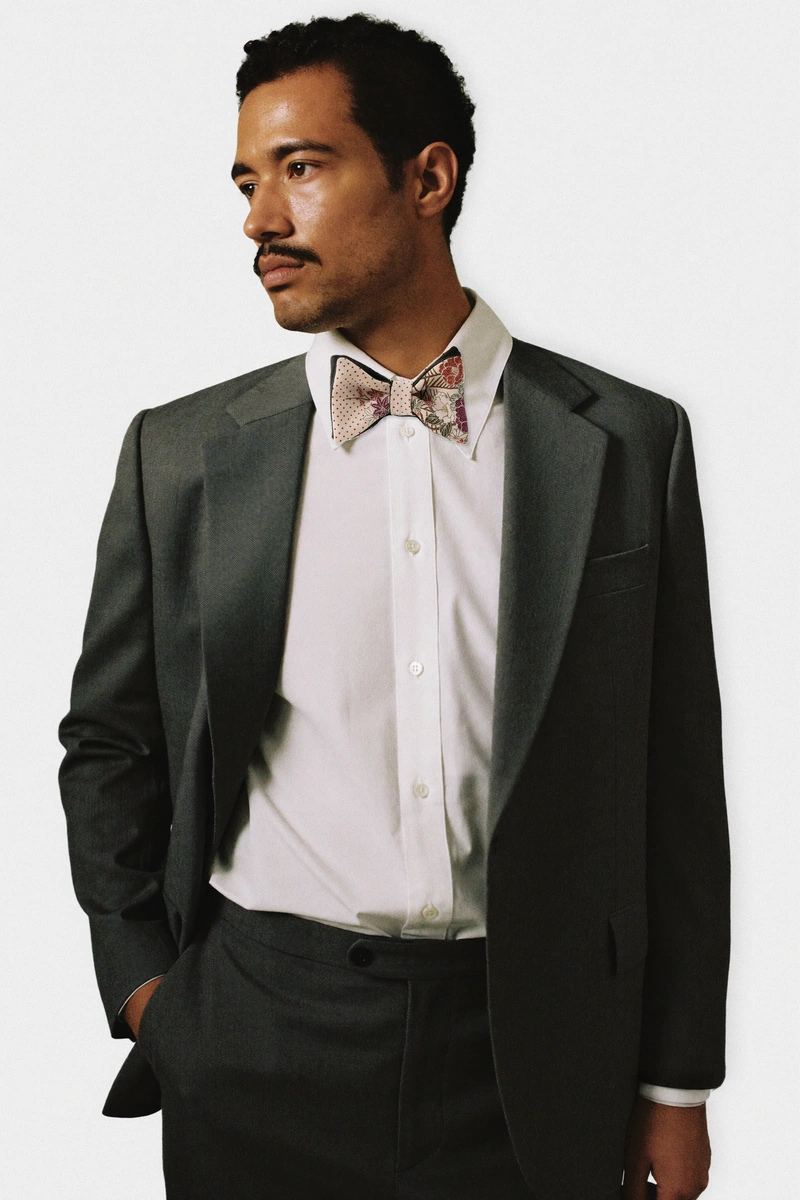
Kazan, a Shibusa bow tie with flowers and dots, worn with a grey suit
KAZAN · SHIBUSA

ONE FRAGMENT, ONE CHOICE

Something that
feels like you.

For a groom who wants to recognise himself in his suit. For a ceremony that welcomes colour. For anyone choosing a detail that can change the presence of a jacket.

The original panel guides the pattern and its position within the bow. Availability varies by design: each choice begins with the material at hand.

Find your Shibusa with us ↗