


Junna
Japanese silk self-tie bow tie · floral
225,00 €
/ piece
Japanese rinzu silk from a vintage 1960s kimono.
Blue, brick red, mustard and green pattern the ivory front; brick red returns on the linen and silk reverse.
On the reverse, 55% linen 45% silk Lanificio di Pray Biella.
Self-tie or hybrid self-tie? +
Self-tie — the traditional bow tie, untied and tied each time you wear it.
Hybrid self-tie — opening hooks let you put it on while keeping the knot tied, preserving the shape of a true self-tie bow tie.
Shipping
Customer care
Made in Italy
Ivory,
with earthy accents.
Blue, brick red, mustard and green pattern the ivory front; brick red returns on the linen and silk reverse.
The pattern changes scale as the silk takes the shape of a bow.
Memory, worn.
First, a Japanese kimono from the 1960s.
Junna brings this fragment of fabric close to the face.
The cut selects the pattern.
The knot changes its presence.
A name.Another era.

Depiction of Junna.
PatrickWhat · Wikimedia Commons · CC BY-SA 4.0
Junna Tennō
Junna was Japan’s fifty-third ruler.
Son of Kanmu and brother of Heizei and Saga, he reigned from 823 to 833.
He abdicated in favour of Ninmyō, continuing the early Heian court’s succession.
The context
The reign
The bow tie’s name opens a connection with Japanese history.
Alongside the memory held in its fabric, the dedication preserves another fragment of the culture behind Shibusa.
Historical sources: Biography of Junna · Imperial Household genealogy
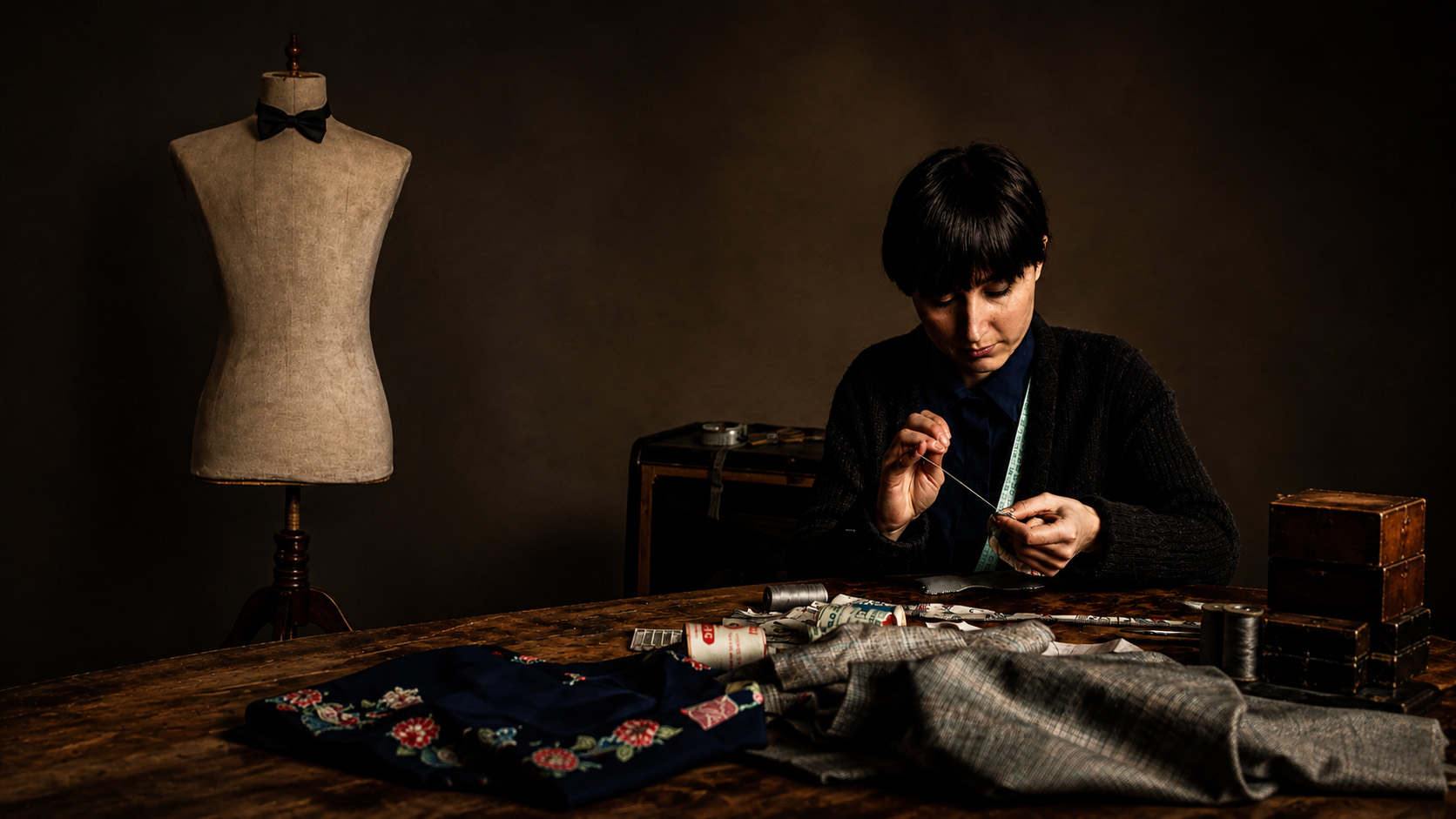
Before the knot, a closer look.
Observe the silk.
Find a balance in the pattern.
Choose where the form begins.
This is the work behind Shibusa, from fabric panel to bow tie.
Angela in the atelier · The world of Shibusa
A closer look. Another world.
Japanese rinzu silk from a vintage 1960s kimono.
Blue, brick red, mustard and green pattern the ivory front; brick red returns on the linen and silk reverse.
The original photographs offer a closer look at the pattern and the actual fabric.
The front.Another surface.
On the front, Japanese rinzu silk from a vintage 1960s kimono.
On the reverse, 55% linen 45% silk Lanificio di Pray Biella.
Nickel-free metal hooks. Adjustable to a maximum neck size of 53 cm.
Self-tieUntie and tie the bow each time you wear it.
Its shape comes from your own hands.
Hybrid self-tieOpening hooks allow you to put on the bow tie while keeping the knot tied.
The purchase selector shows the versions currently available.
The Japanese silk
Bow dimensions, cm
Maximum neck size
Colour, close to the face.
A blue or dark brown jacket can echo the warmth of the palette, with a white shirt and a restrained choice of other accessories.
The bow tie is where Banderari’s exploration began in 2014.
Junna brings its own textile pattern to this form.
The memory of the material meets a contemporary way of wearing it.
JUNNA
SHIBUSA
JAPANESE RINZU SILK FROM A VINTAGE 1960S KIMONO
REVERSE: 55% LINEN 45% SILK LANIFICIO DI PRAY BIELLA
Read the object.
Material, provenance, construction and proportions.
The details to help you choose Junna and read its photographs.
ObjectSelf-tie bow tie.
CollectionShibusa.
FrontJapanese rinzu silk from a vintage 1960s kimono.
Reverse55% linen 45% silk Lanificio di Pray Biella.
Frontfloral · ivory, blue, brick red, mustard yellow, green.
Reversesolid · brick red.
ConstructionSelf-tie and hybrid self-tie versions.
Nickel-free metal hooks. Adjustable to a maximum neck size of 53 cm.
DimensionsHeight: 7 cm. Overall length: 92 cm. Bow: 12 cm wide × 7 cm high.
Presentation and careContact Banderari for information on packaging and care.
CraftsmanshipHandmade in Umbria, Italy.