

Montoku
Japanese silk self-tie bow tie · floral
185,00 €
/ piece
Japanese chirimen silk from a vintage 1960s kimono.
The floral pattern pairs grey-blue and midnight blue; the reverse continues in the darker blue.
On the reverse, 100% wool Super 170’s Fratelli Piacenza 1733.
Self-tie or hybrid self-tie? +
Self-tie — the traditional bow tie, untied and tied each time you wear it.
Hybrid self-tie — opening hooks let you put it on while keeping the knot tied, preserving the shape of a true self-tie bow tie.
Shipping
Customer care
Made in Italy
Two depths
of blue.
The floral pattern pairs grey-blue and midnight blue; the reverse continues in the darker blue.
The pattern changes scale as the silk takes the shape of a bow.
Memory, worn.
First, a Japanese kimono from the 1960s.
Montoku brings this fragment of fabric close to the face.
The cut selects the pattern.
The knot changes its presence.
A name.Another era.

Depiction of Montoku.
Autore non indicato · Wikimedia Commons · Public domain
Montoku Tennō
Montoku was Japan’s fifty-fifth ruler.
Son of Ninmyō, he came to the throne in 850 and reigned until 858.
His son Seiwa succeeded him while still a child, as the Fujiwara family’s influence grew.
The context
The reign
The bow tie’s name opens a connection with Japanese history.
Alongside the memory held in its fabric, the dedication preserves another fragment of the culture behind Shibusa.
Historical sources: Biography of Montoku · Imperial Household genealogy
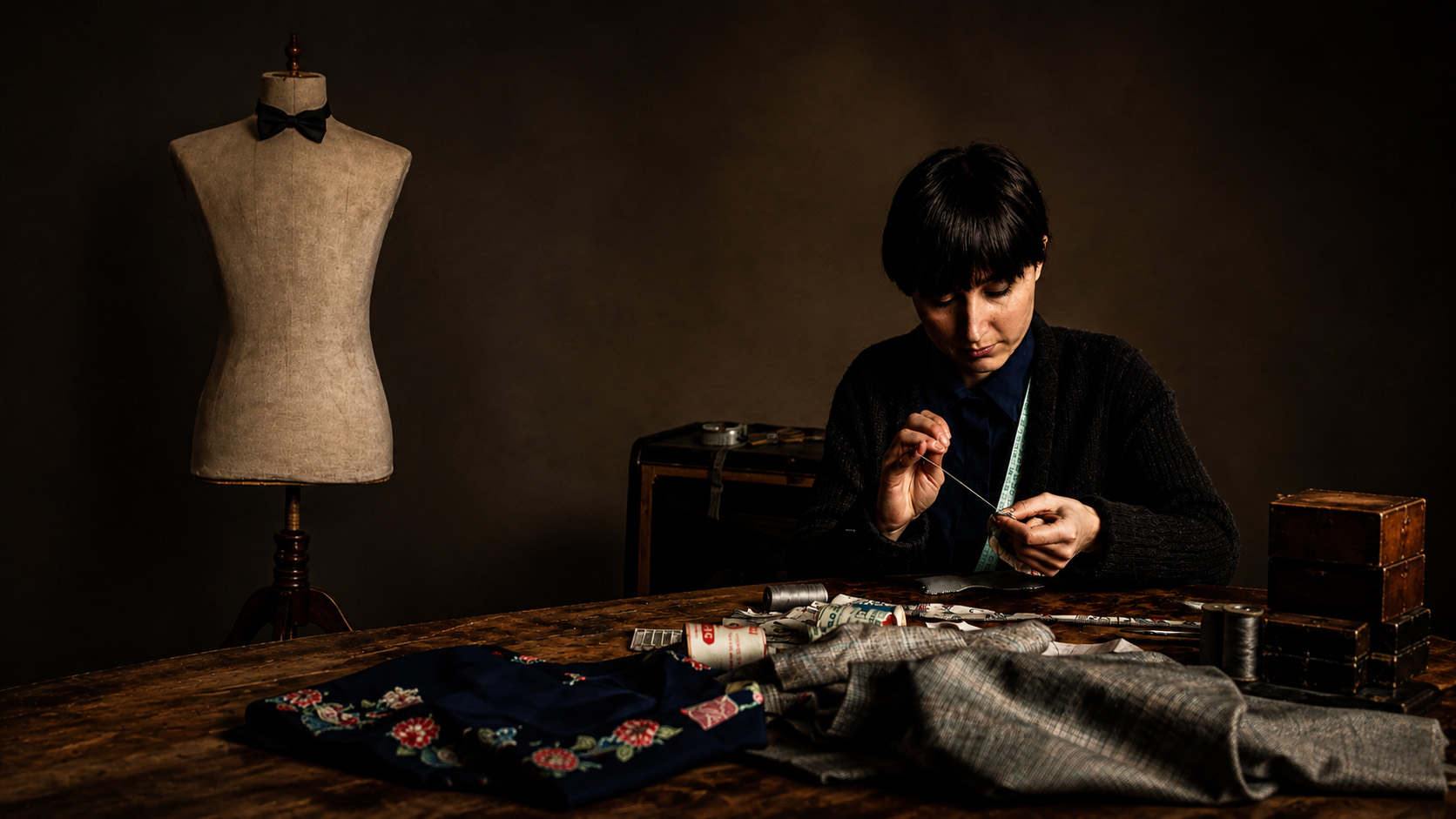
Before the knot, a closer look.
Observe the silk.
Find a balance in the pattern.
Choose where the form begins.
This is the work behind Shibusa, from fabric panel to bow tie.
Angela in the atelier · The world of Shibusa
A closer look. Another world.
Japanese chirimen silk from a vintage 1960s kimono.
The floral pattern pairs grey-blue and midnight blue; the reverse continues in the darker blue.
The original photographs offer a closer look at the pattern and the actual fabric.
The front.Another surface.
On the front, Japanese chirimen silk from a vintage 1960s kimono.
On the reverse, 100% wool Super 170’s Fratelli Piacenza 1733.
Nickel-free metal hooks. Adjustable to a maximum neck size of 53 cm.
Self-tieUntie and tie the bow each time you wear it.
Its shape comes from your own hands.
Hybrid self-tieOpening hooks allow you to put on the bow tie while keeping the knot tied.
The purchase selector shows the versions currently available.
The Japanese silk
Bow dimensions, cm
Maximum neck size
Colour, close to the face.
A grey jacket and white shirt distinguish the bow tie from the suit and reveal its variations of blue.
The bow tie is where Banderari’s exploration began in 2014.
Montoku brings its own textile pattern to this form.
The memory of the material meets a contemporary way of wearing it.
MONTOKU
SHIBUSA
JAPANESE CHIRIMEN SILK FROM A VINTAGE 1960S KIMONO
REVERSE: 100% WOOL SUPER 170’S FRATELLI PIACENZA 1733
Read the object.
Material, provenance, construction and proportions.
The details to help you choose Montoku and read its photographs.
ObjectSelf-tie bow tie.
CollectionShibusa.
FrontJapanese chirimen silk from a vintage 1960s kimono.
Reverse100% wool Super 170’s Fratelli Piacenza 1733.
Frontfloral · grey-blue, midnight blue.
Reversesolid · midnight blue.
ConstructionSelf-tie and hybrid self-tie versions.
Nickel-free metal hooks. Adjustable to a maximum neck size of 53 cm.
DimensionsHeight: 7 cm. Overall length: 92 cm. Bow: 12 cm wide × 7 cm high.
Presentation and careContact Banderari for information on packaging and care.
CraftsmanshipHandmade in Umbria, Italy.